Joint care for dogs isn’t only a senior-dog concern. The way you support your dog’s joints across their life — from puppy through to old age — directly shapes how comfortably they move in their final years.
This guide explains what proper joint care actually looks like for UK dog owners, the ingredients that have real evidence behind them, when to start, and how to recognise the early signs that your dog needs more support.
Most owners come to joint care for dogs the same way: they notice something has changed. The dog hesitates before jumping into the boot. Stairs become a slower negotiation. A morning that used to start with a sprint to the lead now begins with a long, careful stretch. By the time those signs appear, joint wear has often been quietly progressing for years.
The good news is that meaningful joint support doesn’t require a complicated regime. It does, however, require the right ingredients in the right doses, started early enough to make a difference. This guide walks through exactly that.
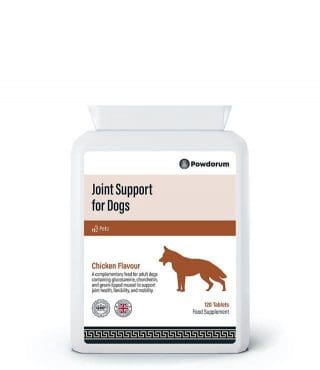
Product referenced in this guide: Pet Joint Support – Glucosamine, Chondroitin & MSM 120/300 Tablets.
What Joint Care for Dogs Actually Means
Joint care for dogs refers to the combination of nutrition, supplementation, exercise, and weight management that maintains healthy cartilage, supports synovial fluid, and reduces the daily wear-and-tear that affects every active dog. It’s a long-term programme, not a treatment.
A dog’s joints — particularly the hips, elbows, knees, and shoulders — rely on a thin layer of cartilage cushioning the ends of the bones, lubricated by synovial fluid. Both gradually thin with age, with use, and (for some breeds) with genetics. Once cartilage is lost, the body cannot fully replace it. The aim of joint care for dogs is therefore to preserve what’s there, support the surrounding tissues, and reduce inflammation that accelerates the loss.
Crucially, this is different from treating arthritis. If your dog has been diagnosed with osteoarthritis, hip dysplasia, or any other joint condition, your vet’s plan takes priority. Supplementation can sit alongside that plan, but it doesn’t replace clinical care.
Signs Your Dog May Need Joint Care
Dogs are excellent at hiding discomfort. Most won’t whimper or limp visibly until the issue is significant — which is why early signs matter.
- Slower to rise from lying down, especially after a long rest
- Stiffness for the first few minutes of a walk, then easing off
- Hesitating before jumping onto sofas, into cars, or up stairs
- Reduced interest in play that previously excited them
- Shifting weight off one leg when standing still
- Audible clicking or popping from a joint during movement
- Licking a specific joint repeatedly
- Mood changes — irritability or withdrawal — without other obvious cause
Two or more of these warrant a vet conversation. None of them, on its own, confirms a problem — but they are the language dogs use to tell you something is uncomfortable. Owners of breeds predisposed to joint issues (Labradors, German Shepherds, Golden Retrievers, Bernese Mountain Dogs, Rottweilers, Newfoundlands and most large breeds) should pay particularly close attention from middle age onwards.

Key Ingredients in Effective Joint Care for Dogs
The supplement aisle for dog joint care is crowded, and not every product is created equal. The ingredients below are the ones with the strongest evidence base — both clinical and from established veterinary practice. When you compare formulas, look for these in meaningful doses, not trace amounts.
Glucosamine
A natural building block of cartilage. A compound found naturally in cartilage, and the most-studied joint ingredient in dogs.. Look for glucosamine sulphate or HCl at 500–1500 mg depending on dog size.
Chondroitin Sulphate
Works synergistically with glucosamine to help maintain cartilage structure and resist compression. Chondroitin for dogs is typically dosed at 200–600 mg daily.
MSM (Methylsulfonylmethane)
A naturally occurring sulphur compound..
Green-Lipped Mussel
Sourced from New Zealand, this whole-food ingredient provides naturally occurring glucosamine, chondroitin, and omega-3 fatty acids in one matrix. Strong evidence base in canine mobility studies.
Omega-3 (EPA & DHA)
A source of EPA and DHA.. Fish oil or algae-derived omega-3 both work; the dose matters more than the source.
Turmeric & Black Pepper
Curcumin from turmeric is commonly paired with piperine from black pepper..
Ingredients that show up on labels but have weaker evidence in dogs include hyaluronic acid (oral form is debated), Boswellia (promising but variable), and collagen peptides (better in humans than in dogs based on current data). Their presence isn’t a red flag, but they shouldn’t be the headline ingredient.
When to Start Joint Care for Your Dog
The honest answer: earlier than most owners think. Joint care is preventative more than corrective. Cartilage loss begins long before symptoms appear, particularly in larger breeds.
Puppyhood (0–12 months)
Most puppies don’t need supplements. Focus on appropriate growth-stage food, controlled exercise (no forced running on hard surfaces, no excessive stairs in the first year), and avoiding overfeeding. Excess weight during growth places lasting strain on developing joints.
Young Adult (1–4 years)
For most breeds, this is the easy phase. For predisposed large and giant breeds, a baseline omega-3 plus an optional low-dose glucosamine programme can begin around age 3–4 — particularly if the dog is active, working, or has a known family history of joint issues.
Mature Adult (5–8 years)
This is the window most owners miss. The majority of senior joint problems become apparent at 8–10 years, but they begin developing in this earlier period. A full joint care formula (glucosamine + chondroitin + MSM + omega-3) makes the most difference when introduced now.
Senior (8+ years)
Joint care for old dogs is a daily commitment. Senior dog joint supplement formulas are typically richer, often including green-lipped mussel and higher omega-3 levels. Combine with a vet check-up every 6–12 months to catch any progression early.
How to Choose the Right Joint Care Product
The shelf is full of similar-looking tubs and similar-sounding claims. Strip past the marketing and ask three questions of any product before you buy:
- Are the active ingredients listed in milligrams per serving? If a label only lists ingredients without doses, you have no way to compare. Walk away.
- Does the dose match your dog’s weight? A 10kg Cocker Spaniel and a 40kg Labrador don’t need the same amount. Reputable brands publish weight-based dosing tables.
- Is the source transparent? Where is the green-lipped mussel from? Is the glucosamine shellfish-derived (a problem for shellfish-sensitive dogs)? Brands willing to answer these questions tend to be the ones worth buying from.
Powdorum’s pet joint care range is built around these principles: clearly stated active doses, weight-based guidance, and ingredient sourcing on every product page.
Pet Joint Support 120 Tablets
A complete formula with glucosamine, chondroitin and MSM — designed as a daily joint care foundation for dogs of all life stages.
Glucosamine Sulphate 1500mg + Chondroitin
High-strength single formula for owners who prefer to layer in their dog’s joint care alongside their own routine. Suitable for medium and large breeds.
Green-Lipped Mussel 500mg
Whole-food joint and mobility support for senior dogs and breeds prone to joint wear. Naturally rich in omega-3s, glucosamine and chondroitin.
For a full breakdown of options, see our guide to joint supplements for dogs, or — if you have a senior dog specifically — the best joint supplements for senior dogs in the UK.
Lifestyle Support That Works Alongside Joint Care
Supplements are one lever. The others matter just as much, and they’re free.
Weight is the single biggest factor. An overweight dog places exponentially more pressure on every joint. The PDSA’s overweight pets guidance notes that even modest weight loss can substantially improve mobility in affected dogs. If your dog is carrying extra weight, that’s the highest-leverage change you can make.
Exercise quality over quantity. Two 30-minute steady walks beat one 90-minute weekend hike for a dog with developing joint wear. Avoid repetitive ball-throwing on hard ground — the deceleration impact is brutal on shoulders and elbows. Swimming is exceptional joint exercise where it’s available.
Bedding and floors. Hard floors and thin beds force joints to absorb the dog’s full weight every time they lie down. Orthopaedic memory foam beds and rugs on slippery laminate make a measurable difference, particularly for older dogs.
Regular vet checks. Vets can catch early joint issues by examining range of motion long before the dog shows symptoms. For predisposed breeds, an annual mobility check from middle age onwards is sensible.
If you’re new to supplementing your dog at all, our guide on whether dogs need supplements covers the broader question of when supplementation makes sense versus when a balanced diet is enough.
Frequently Asked Questions
How long does it take for joint care for dogs to work?
Most quality joint care formulas show observable benefits within 4–6 weeks of consistent daily use, though some dogs respond faster. The full effect typically appears by 8–12 weeks. Joint care is cumulative — stopping after a fortnight is the most common reason owners conclude a supplement “didn’t work.”
Do joint supplements actually work for dogs?
The evidence varies by ingredient. Glucosamine, chondroitin, omega-3 fatty acids, and green-lipped mussel all have peer-reviewed studies supporting their use in canine joint health. The quality of the formula, the dose relative to your dog’s weight, and consistent daily use all materially affect whether you see results.
What is the best age to start joint care for a dog?
For most breeds, age 5–6 is the practical sweet spot — after rapid growth has finished but before symptoms typically appear. For large and giant breeds prone to joint issues (Labradors, German Shepherds, Golden Retrievers, Bernese Mountain Dogs), starting at age 3–4 is increasingly common practice.
Can I give my dog human joint supplements?
Don’t. Some human supplements contain ingredients that are unsafe for dogs (xylitol is the most common danger), and the dosing isn’t calibrated for canine weight ranges. Always use a product formulated specifically for dogs.
Are joint care supplements safe long-term for dogs?
The core ingredients — glucosamine, chondroitin, MSM, omega-3s, green-lipped mussel — have strong long-term safety profiles in dogs when used at recommended doses. If your dog is on prescription medication or has an existing health condition, run any new supplement past your vet first.
Should I give my dog joint care if they show no symptoms?
For predisposed breeds, yes — that’s the point. Joint care is at its most effective when started before symptoms appear. For low-risk breeds with no family history, beginning around age 6–7 as a preventative measure is reasonable. Talk to your vet about your specific dog.